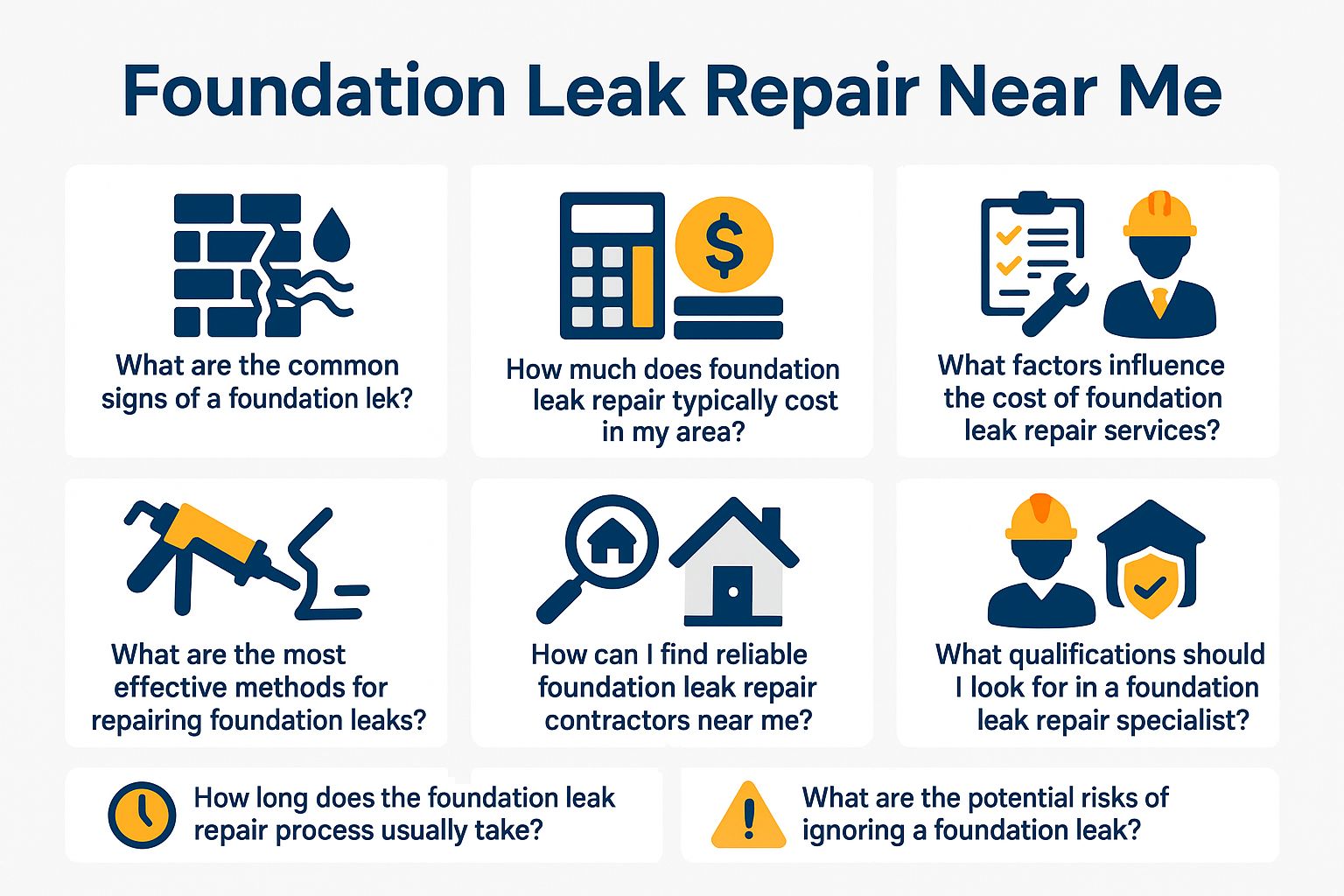
Are you noticing signs of foundation leaks in your home?
Selecting the right foundation repair company nearby is crucial in ensuring quality repairs and peace of mind. An experienced local company can offer the high-standard workmanship you need for foundation repair.
Start your search by reading online reviews. Check ratings with trusted sources like the Better Business Bureau and the Utah Department of Commerce.
This guide covers common signs of foundation leaks. It also provides potential repair costs and tips for finding dependable contractors. Let us help you safeguard your home and investment with the right foundation repair choice.
What are the common signs of a foundation leak that you should look for?
Common signs of a foundation leak include water intrusion in basements, damp walls, and musty odors. These may indicate structural damage or foundation problems.
To effectively identify a foundation leak, it is important to observe specific signs.
- Water stains on walls may indicate moisture intrusion.
- Additionally, any cracks in the foundation should be carefully examined. These could serve as entry points for water seeping.
- Musty odors are often indicative of mold growth resulting from excess moisture.
- Damp spots on carpets or floors may suggest moisture retention, while bowing walls could be a sign of pressure resulting from water accumulation.
Early detection is crucial to preventing costly repairs. Conduct regular property inspections, especially after heavy rainfall, utilizing effective solutions like inspection services.
How much does foundation leak repair typically cost in my area?
Foundation leak repair costs vary by region. They typically range from $2,000 to $7,000 based on the severity of the issue and project scope.
For minor repairs, such as addressing small leaks, prices generally fall between $2,000 and $4,000. Moderate repairs, which involve larger cracks or drainage issues, usually range from $4,000 to $6,000. In instances of extensive damage, costs may escalate to $6,000 or more.
To gain a clearer understanding of local pricing variations, it is advisable to utilize tools such as HomeAdvisor to obtain cost estimates from contractors in your area. It is also prudent to compare multiple estimates to ensure the selection of a reliable professional who aligns with your budget and repair requirements.
What factors influence the cost of foundation leak repair services?
Several key factors influence the cost of foundation leak repair, including the scope of the project, local labor rates, and the complexity of the necessary repairs. One significant consideration is the severity of the leak; more severe leaks generally necessitate extensive repairs, which can substantially increase costs, making financing options worth considering.
For example, repairs on a concrete slab foundation may range from $1,500 to $5,000, while issues related to basements can exceed $10,000, especially with complex basement drainage systems. Furthermore, if the location is difficult to access, such as in a rural area, transportation costs will likely rise.
It is also important to consider the materials used in the repair process as well. Research local averages to avoid unforeseen expenses.
Conducting research on local averages is advisable to avoid unforeseen expenses.
What are the most effective methods for repairing foundation leaks?
Effective methods for repairing foundation leaks include waterproofing, concrete sealing, and drainage system installation. Each method is tailored to the specific leak type.
For waterproofing, exterior membranes provide long-lasting waterproofing. However, they require significant excavation, costing between $3,000 and $8,000. Interior sealants, while more accessible and capable of quick application for approximately $300, tend to be less durable.
The installation of French drains can efficiently redirect water, typically costing between $1,000 and $5,000 depending on the complexity of the system. Basement waterproofing techniques can complement these methods. In contrast, foundation underpinning addresses serious structural issues and may cost between $1,000 and $3,000 per pier, ultimately ensuring long-term stability.
Evaluate each case to select the best method. Balance cost with long-term effectiveness.
How to Find Reliable Foundation Leak Repair Contractors Near You
To find reliable contractors, verify their credentials, check online reviews, and ask for local references.
Start by using platforms like Angie’s List or Yelp for reviews. These sites offer firsthand accounts from past clients. Next, check the Better Business Bureau for contractor ratings and complaints.
Verify the contractor’s licenses and insurance to ensure they comply with local regulations.
Get free estimates from at least three contractors for competitive pricing. Compare bids carefully. Look for detailed explanations of the work and timelines to avoid hidden costs.
What qualifications should I look for in a foundation leak repair specialist?
Choose a foundation leak repair specialist based on key qualifications like licensing, insurance, and knowledge of local building codes.
Look for industry certifications like those from Foundation Supportworks, which show a commitment to best practices. Prioritize specialists with positive testimonials and proven expertise in your area.
How long does the foundation leak repair process usually take?
Foundation leak repairs usually take a few days to a couple of weeks. The duration depends on the project’s scope and methods.
Factors like weather conditions and contractor availability can affect these timelines.
What are the potential risks of ignoring a foundation leak?
Ignoring a foundation leak poses serious risks like structural damage, higher repair costs, and compromised safety.
One major risk is structural failure. Neglected leaks can increase repair costs by up to 20% each year. Homes with foundation issues often lose 10% to 15% in property value, affecting resale potential. This highlights the need for lasting repairs.
Recent data indicates that neglecting a leak for just one year can cause average repair costs to escalate from $2,000 to over $5,000, underscoring the necessity of prompt action.
How can I prevent future foundation leaks in my home?
Preventing future foundation leaks requires proactive steps like proper drainage, regular maintenance, and smart landscaping, supported by construction techniques. To protect your foundation, consider these prevention strategies:
- First, install gutters and downspouts to ensure that water is directed away from your home.
- Second, grade the soil so that it slopes away from the foundation, thereby minimizing water accumulation.
- Third, implement basement waterproofing techniques, such as utilizing WaterGuard for efficient drainage.
Schedule annual inspections to catch potential issues early. Additionally, maintaining crawl spaces by encapsulating them will create a moisture barrier, further protecting the foundation.
Furthermore, using products like basement sealants and drainage systems can greatly improve your protection strategy.
Are there any warranties or guarantees offered on foundation leak repairs?
Reputable foundation repair contractors offer warranties for their work. This ensures durable repairs and customer satisfaction. Understanding the various types of warranties available can aid in making informed decisions.
Workmanship warranties cover labor costs for repairs. They usually last from one to ten years. In contrast, material warranties cover the quality of the materials used. They can last up to twenty-five years.
Furthermore, transferable warranties can be passed to new homeowners. This is beneficial during a home sale.
For example, Basement Systems offers a twenty-five-year warranty on materials and a lifetime warranty on workmanship, providing great assurance for homeowners.
What should I expect during a foundation leak inspection by a licensed contractor?
Expect a thorough evaluation during a foundation leak inspection. This includes visual checks, moisture readings, and foundation assessments. The inspection process includes these critical steps:
- Initiate with an exterior assessment, examining for cracks, drainage problems, and indications of improper grading, likely causes of foundation issues.
- Proceed with an interior inspection that focuses on identifying moisture spots, mold, or warped flooring.
- Employ tools such as moisture meters to detect concealed water sources, which are essential for accurately identifying leaks.
Based on the findings from this thorough inspection, repairs may include sealing cracks or installing a WaterGuard drainage system based on inspection findings. The typical costs for an inspection typically range from $150 to $300. This depends on property size and issue complexity.
Can I attempt DIY repairs for minor foundation leaks using concrete sealants?
While minor foundation leaks may be addressed using do-it-yourself methods, it is crucial to evaluate the severity of the issue to prevent exacerbation.
- Begin by identifying the source of the leak, which may manifest as mold or cracks in the concrete.
- Once the source has been identified, thoroughly clean the affected area to mitigate the risk of future complications.
- Subsequently, apply a sealant, such as a concrete sealer or other concrete sealants, to fill the cracks and establish a waterproof barrier.
- After the application of the sealant, monitor the repair for any signs of recurring leaks over the following weeks.
- If the leaks persist or worsen, it is advisable to consult a professional to assess any underlying structural concerns.
What are the environmental factors that can contribute to foundation leaks in my area?
Heavy rainfall, poor drainage, and soil type are key factors that contribute to foundation leaks. Knowing these helps in repair. A comprehensive understanding of the interplay among these factors can assist homeowners in mitigating risks. For example, clay soils tend to retain water, resulting in pooling that increases the likelihood of leakage, whereas sandy soils facilitate rapid drainage, thereby reducing moisture levels.
Local climates with an average annual rainfall exceeding 40 inches are particularly susceptible to foundation issues. Additionally, surrounding vegetation can destabilize foundations as root systems grow and displace soil.
In areas near large water bodies, monitor moisture levels closely. They can rise significantly and threaten foundation integrity. Conducting inspections every few years is advisable to enable early detection of potential problems.
How does the foundation repair process differ depending on the type of foundation?
The foundation repair process varies by foundation type, such as slab, crawl space, or basement foundations.
-
For slab foundations, slab lifting with polyurethane foam is an effective technique.
-
This method costs between $1,000 and $3,500 and takes about one day to complete.
-
Crawl spaces benefit from encapsulation, which includes installing a vapor barrier and dehumidifiers.
-
This process costs between $2,000 and $5,000 and takes about two days to finish.
-
Basement foundations often require waterproofing and wall stabilization.
-
These services can cost between $3,000 and $10,000 and may take three to five days.
Knowing these differences helps homeowners make informed decisions about foundation repairs.
What questions should I ask foundation leak repair contractors before hiring them?
Ask important questions before hiring foundation leak repair contractors to ensure they are trustworthy and qualified.
Check that they are a licensed foundation repair company recognized by the Better Business Bureau.
Start with these key questions:
- What are your credentials and licenses? This will help verify their qualifications.
- Can you provide local references? Speaking with previous clients will offer valuable insight into their reliability.
- What is your warranty policy? Understanding this will elucidate the protection afforded to your investment.
- How do you assess the severity of the leak? A detailed methodology reflects a high level of professionalism.
- What methods do you recommend and why? This inquiry will reveal their experience and expertise in the field.
Evaluating their responses will help you choose a qualified contractor for your needs.
How do I know if my homeowner’s insurance covers foundation leak repairs and other home improvement costs?
Check your homeowner’s insurance policy and consult your provider to see if it covers foundation leak repairs.
Search for coverage options that can be transferred.
- Begin by locating your policy documents and examining sections labeled ‘water damage’ and ‘structural damage’ to identify specific coverage details.
- Following this, it is prudent to contact your insurance agent to clarify any uncertainties regarding your coverage. You may wish to inquire about scenarios such as gradual water damage, which may be excluded, in contrast to sudden leaks, which could potentially be covered.
Be aware of common policy exclusions like damage from natural disasters or lack of maintenance, as these can affect your foundation repair claim.
