Insulating a crawl space with dirt floors is essential for combating moisture problems. It also improves indoor air quality and enhances energy efficiency. Understanding how to effectively implement crawl space insulation can transform your home’s overall comfort while protecting it from mold, structural damage, and radon gas infiltration. In this article, we’ll share proven insulation tips and tricks for insulating your crawl space, ensuring a healthier environment and long-lasting results. Dive in to discover practical insulation solutions that will safeguard your home from the ground up!
Understanding the Importance of Insulation
Proper insulation in crawl spaces boosts energy efficiency. It also helps control moisture and improves indoor air quality.
Energy Efficiency Benefits
Crawl space insulation can reduce heating costs by up to 30%. This significantly lowers annual energy expenses for homeowners and improves home comfort.
One effective material for this purpose is rigid foam panels, which have high R-values, ranging from 5 to 6 per inch. They offer better insulation than traditional fiberglass options.
Another viable alternative is spray foam insulation, which expands to fill gaps. It offers an R-value of about 6.5 per inch, enhancing air sealing.
Homeowners should also consider encapsulation, which involves installing a moisture barrier to prevent mold. This can save an additional 10% on energy bills by preventing heat loss.
Collectively, these strategies can provide significant long-term financial benefits and contribute to effective moisture control.
Controlling Mold and Moisture
Effective insulation strategies play a crucial role in mitigating mold growth by regulating humidity levels. This is essential for maintaining optimal indoor air quality.
To manage moisture effectively, it is advisable to install vapor barriers in crawl spaces to block ground moisture. High-quality polyethylene sheeting works best. Additionally, integrating a humidity monitoring system helps track moisture levels.
For example, the Eve Room sensor offers real-time humidity readings, providing alerts when humidity levels exceed safe thresholds. Case studies have shown that homes that adopt these measures experienced a 30% reduction in mold incidents, thereby enhancing air quality and minimizing associated health risks.
How to Assess Your Crawl Space
Assessing the crawl space entails identifying moisture issues, evaluating the existing insulation materials, and ensuring optimal performance.
Identifying Moisture Issues
- Check humidity levels. If it’s over 60%, there may be moisture issues. Use a hygrometer to measure accurately; optimal levels should range between 30% and 50%.
- Inspect the crawl space for dampness. Look for water stains, mold, or musty odors. If moisture persists, consider a dehumidifier, such as the hOmeLabs 50 Pint Dehumidifier, which is designed to efficiently reduce humidity levels in spaces up to 4,500 square feet.
- Regularly maintain the dehumidifier. Empty the water tank or connect a drain hose to prevent damp insulation.
Evaluating Current Insulation
Check your current insulation’s condition. This helps minimize energy loss and moisture issues.
- Begin by inspecting the insulation for any signs of dampness, as this may indicate a moisture problem or foundation issues. Employ a moisture meter to identify levels exceeding 20%, which would warrant replacement.
- Next, assess for air leaks around windows and doors by conducting a straightforward test: hold a lit candle near potential draft sources; if the flame flickers, this indicates the presence of air leaks.
- Furthermore, examine the thickness of the insulation. Recommended insulation levels differ by climate. They typically range from R-30 to R-60. Upgrading to insulation with a higher R-value can significantly decrease energy costs and enhance overall home comfort.
Choosing the Right Insulation Material
Choosing the right insulation material is crucial for energy efficiency, mitigating moisture-related issues, and preventing structural damage in crawl spaces.
Foam Board Insulation
- Foam board insulation provides superior thermal resistance and acts as a thermal barrier, making it an ideal option for crawl spaces with dirt floors.
- The cost of the sheets typically ranges from $1.50 to $3.00 per square foot.
- The installation process begins with measuring the area and then cutting the foam to the appropriate size using a utility knife. It is important to achieve a snug fit and to seal any joints with spray foam or tape to enhance energy efficiency.
- Foam boards generally have an R-value ranging from 4 to 6 per inch, which results in significant reductions in heat loss compared to traditional insulation methods, which often range from 2.9 to 3.8.
Fiberglass Batts
- Fiberglass batts represent a cost-effective insulation solution, with typical pricing ranging from $0.50 to $1.00 per square foot, making them an excellent choice for budget-conscious homeowners.
- The installation of fiberglass batts involves first measuring the wall cavities and then cutting the batts to fit securely without compression. Ensuring a proper fit is essential to maximize the efficacy of the fiberglass insulation.
- Using a vapor barrier is important, especially in moisture-prone areas, as this can help mitigate the risk of mold growth.
- A notable drawback of fiberglass batts is their propensity to absorb moisture, which can diminish their effectiveness, so it is important to ensure adequate ventilation in the spaces being insulated.
Installation Techniques for Dirt Floors
The implementation of appropriate insulation installation techniques for dirt floors is essential for achieving effective insulation and moisture control within the crawl space.
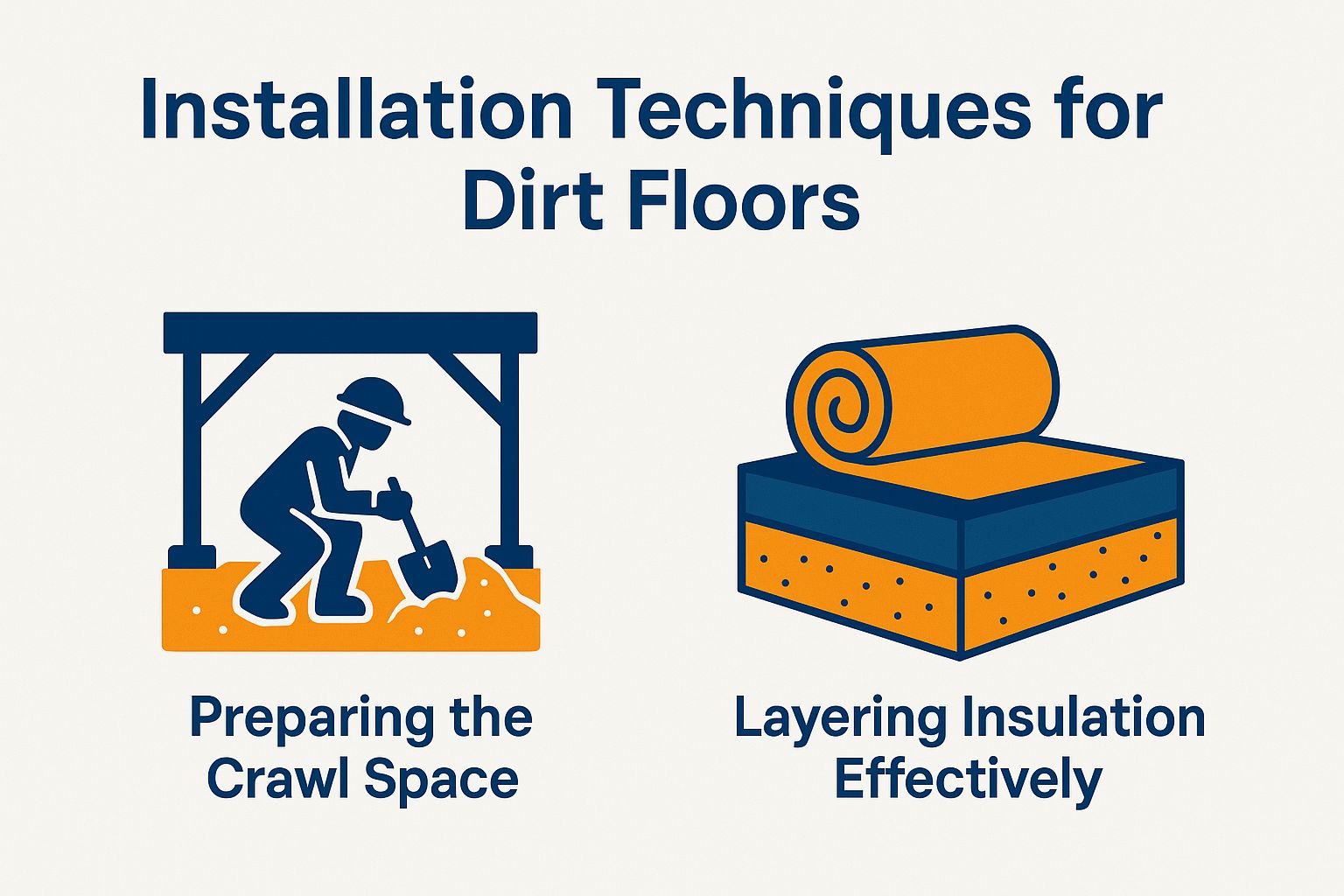
Preparing the Crawl Space
Start by cleaning and preparing the crawl space, which entails the removal of debris, addressing pest problems, and ensuring proper ventilation.
Next, focus on moisture and temperature control. It is advisable to utilize a dehumidifier, preferably one equipped with built-in hygrometers, to maintain humidity levels below 60%. Additionally, seal any air leaks around vents and pipes with caulk or spray foam to prevent the ingress of outside air.
The following tools will be required for this task:
- A vacuum for debris removal
- A moisture meter to assess humidity levels
- Caulk or spray foam for sealing purposes
Plan for about 3 to 5 hours to finish the insulation project, thereby ensuring a dry and healthy crawl space.
How to Layer Insulation Effectively
Proper layering of insulation is essential for maximizing thermal performance, minimizing the risk of moisture accumulation, and adhering to building codes in crawl spaces.
- Start by placing a layer of rigid foam board insulation against the crawl space walls.
- Use construction adhesive to secure the panels. This ensures a tight fit and eliminates gaps.
- Next, apply waterproof tape to the seams of the foam boards to improve moisture control.
- For the best results, add a second layer of fiberglass batts on the crawl space floor.
Many homes have successfully used this insulation technique. It significantly reduces heating costs and improves air quality.
Maintenance and Monitoring
Regular maintenance and monitoring keep crawl space insulation effective over time.
Regular Inspections
Inspect crawl space insulation at least twice a year. This helps evaluate its condition and spot moisture issues.
Look for moisture signs like water stains or mold during inspections. These may indicate bigger problems.
Use a moisture meter to check humidity levels. Keep them below 60%.
If some areas are hard to reach, consider using a borescope camera. It inspects without causing disruption. Regular inspections help detect issues early, preventing costly repairs later.
Signs of Insulation Failure
Signs of insulation failure include high energy costs, visible mold, and gaps in insulation. Act quickly if you see these signs.
Start by visually inspecting the insulation, especially in attics and crawl spaces.
Look for moisture stains or signs of rodent activity during the inspection.
If you find mold, clean the area with water and vinegar. Then, consider replacing the damaged insulation professionally.
Seal any gaps with spray foam insulation or fiberglass, available at local hardware stores. This enhances energy efficiency.
Monitor energy bills for sudden increases. This helps you understand insulation effectiveness and the need for reassessment.
