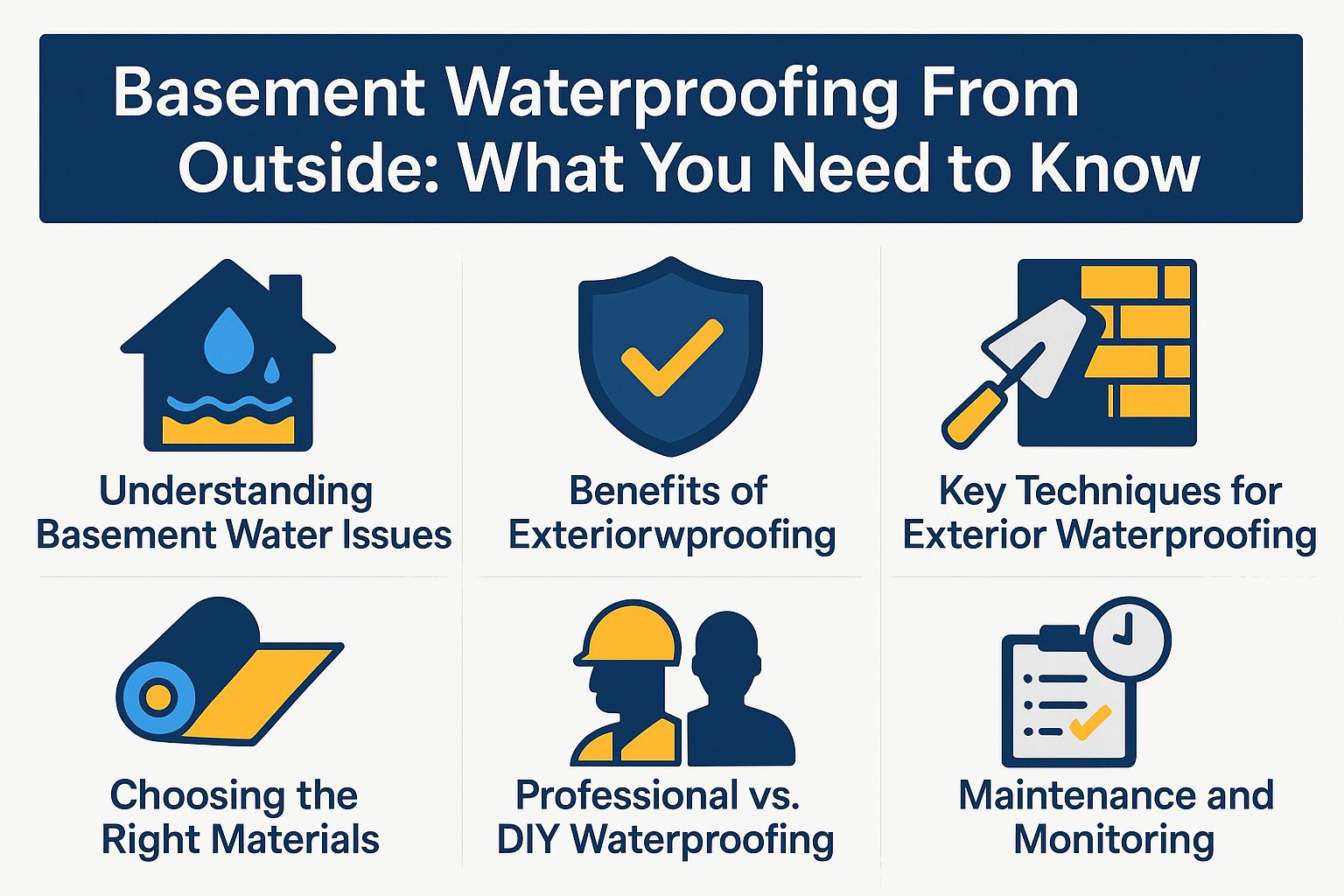
To protect your home, outside basement waterproofing is crucial for preventing moisture problems. Focusing on foundation walls helps reduce water infiltration risks. This article explains the causes of basement water issues, highlights the benefits of external solutions, and offers practical techniques to keep your foundation dry. Learn how to protect your investment and boost your property’s value now!
Understanding Basement Water Issues
Basement water issues, like seepage, can damage your home’s structure and lead to costly repairs.
Common Causes of Water Infiltration
Water infiltration often comes from hydrostatic pressure, plumbing leaks, and poor drainage systems, each contributing to the potential for moisture-related damage.
Hydrostatic pressure happens when the water table rises and pushes against cinderblock foundations, causing cracks and leaks. Plumbing leaks can be effectively identified using tools such as FLIR thermal cameras, which detect temperature variations that indicate the presence of moisture.
Soil conditions, including elevated water tables, can significantly increase water saturation around foundations. Additionally, poor grading worsens these issues. If the ground slopes toward the house, pooling occurs, leading to more infiltration.
Seasonal rains in areas with heavy rainfall can overwhelm drainage systems. This allows water to seep into vulnerable areas, affecting the basement.
Signs of Water Damage
Spotting early signs of water damage can save homeowners from costly foundation repairs. Common indicators include stains on walls or ceilings, which may signal leaks, as well as musty odors that suggest the presence of mold growth.
Additionally, homeowners should be vigilant for cracks in foundation walls and peeling paint, as these may indicate moisture intrusion.
If you see damp spots in window wells, investigate the issue right away. Upon noticing any of these signs, homeowners should take immediate action by following these steps:
- Document the damage with photographs.
- Consult a professional for a thorough assessment.
- Use temporary solutions like dehumidifiers to reduce further issues.
Benefits of Exterior Waterproofing
Exterior waterproofing protects your basement from moisture and increases your property’s value.
Long-Term Protection
Use two main methods to prevent moisture issues: install waterproof membranes and create proper drainage systems.
- For instance, the application of a rubberized asphalt membrane can provide a durable barrier around the foundation.
- Meanwhile, the installation of a French drain effectively redirects water away from susceptible areas.
Quality installation is key. Well-applied waterproof membranes and French drains can cut foundation repair costs by up to 70%, especially in high water table areas.
Additionally, regularly inspect drainage systems and waterproof coatings to ensure they work well and protect your investment for years.
Increased Property Value
Exterior waterproofing can increase a property’s value by up to 15%. It reduces the risk of moisture damage and protects the home’s structure.
A recent study found that homes with waterproofed basements sold for an average of $25,000 more than similar homes without waterproofing. Homeowners, such as Sarah Thompson, reported that after investing $9,000 in exterior waterproofing, her property sold in just two weeks, significantly above the asking price.
These improvements attract buyers and build confidence in the home’s durability. It’s a smart investment for current and future homeowners.
Key Techniques for Exterior Waterproofing
Effective exterior waterproofing includes various techniques to protect against water infiltration.
Excavation and Drainage Systems
Excavating soil properly and installing a strong drainage system are key to effective waterproofing. The process begins with excavating around the foundation walls. You will likely need a Bobcat E165, which costs about $250 per day to rent.
Excavate at least 12 inches below the foundation level. Following the excavation, install a French drain. This involves laying perforated pipe surrounded by gravel to redirect water from the foundation.
Materials for this project, including pipe and gravel, typically cost between $500 and $800. If you hire a contractor, labor costs can range from $1,000 to $2,500, based on the drainage system’s scope and depth.
Waterproof Coatings and Membranes
Applying waterproof coatings and membranes greatly reduces the risk of water intrusion and foundation damage.
The main types of waterproof coatings are cementitious and liquid rubber. Cementitious coatings are easy to mix and apply. They provide a strong barrier against water for about $1 to $2 per square foot. In contrast, liquid rubber is more flexible and adapts to surface movements, costing between $3 and $5 per square foot.
For membranes, bituminous sheets are durable, while liquid-applied membranes offer flexibility.
Studies show that buildings with EPDM experienced a 30% reduction in leaks over five years. This highlights the importance of choosing the right waterproofing solution.
Choosing the Right Materials
Choosing the right materials for waterproofing is vital for durability and preventing moisture infiltration.
Start by assessing your project’s specific requirements. For membranes, bituminous sheets are durable, and liquid-applied membranes offer versatile application.
For drainage, use perforated pipes to redirect water away from the structure. Combine them with geotextiles for proper filtration, ensuring proper grading and landscape techniques are applied.
Essential tools for this process include:
- A trowel for applying membranes
- A shovel for excavating drainage trenches
Also, consider local climate and soil conditions. Areas with heavy rainfall may need thicker membranes and better drainage systems.
Professional vs. DIY Waterproofing
Deciding between professional waterproofing services and do-it-yourself (DIY) methods impacts both cost and effectiveness.
When to Hire a Professional
Knowing when to hire a waterproofing professional can save homeowners money and ensure proper repairs. Homeowners should consult a professional if you face these issues:
- when dealing with serious moisture problems and mold,
- when repairs require specialized tools like industrial dehumidifiers, or
- when a warranty is needed for future claims.
For extensive water damage in a basement, professional services usually cost between $1,500 and $5,000, depending on the severity. Homeowners receive a detailed property assessment and customized solutions for lasting water protection.
DIY Tips and Tricks
DIY waterproofing can be a cost-effective option when done correctly with the right techniques and proper preparation.
- Begin by meticulously cleaning the surface to eliminate dirt and debris, thereby enhancing the adhesion of the waterproofing solution.
- For the application process, it is advisable to utilize the Graco Ultra 395, which effectively sprays coatings while minimizing streaks.
- If necessary, apply a primer, and then select a high-quality waterproofing paint or sealant-products such as Behr Premium and Drylok are known for their durability.
- Utilize a roller for flat surfaces and a brush for corners or edges to ensure uniform coverage.
- Allow enough drying time before exposing the surface to moisture.
Maintenance and Monitoring
Regular maintenance and monitoring are essential for waterproofing systems to remain effective. To maintain your waterproofing system, conduct seasonal inspections. Focus on clean foundation areas and check the roof and exterior foundation.
Clean gutters to prevent water accumulation. This task should be done at least twice a year. It is also important to examine drainage systems, including French drains and drainage boards, for any blockages or signs of erosion.
Use tools like a moisture meter and dimple board to assess areas that might leak or sustain moisture damage. These inspections should be carried out prior to the rainy season and following heavy storms, considering atmospheric conditions and potential repair damage.
Document findings and address any issues promptly. Consider using a sump pump or window well covers to maintain your waterproofing system. This proactive approach, including consulting contractors about foundation repair costs, can save money on future repairs.
