Basement floor cracks can signal serious issues in your Milwaukee, WI home. Understanding the common causes of cracks, such as the shrinkage of concrete, settling soil issues, and the impacts of tree root damage, is crucial for effective repair. With insights from Everdry Waterproofing, this article will guide you through diagnosing the problems and provide practical solutions to fix them. Don’t let basement floor cracks compromise your home’s integrity-read on to learn how to tackle these challenges today!
Common Causes of Basement Floor Cracks
Knowing the causes of basement floor cracks helps in crafting effective prevention and repair strategies.
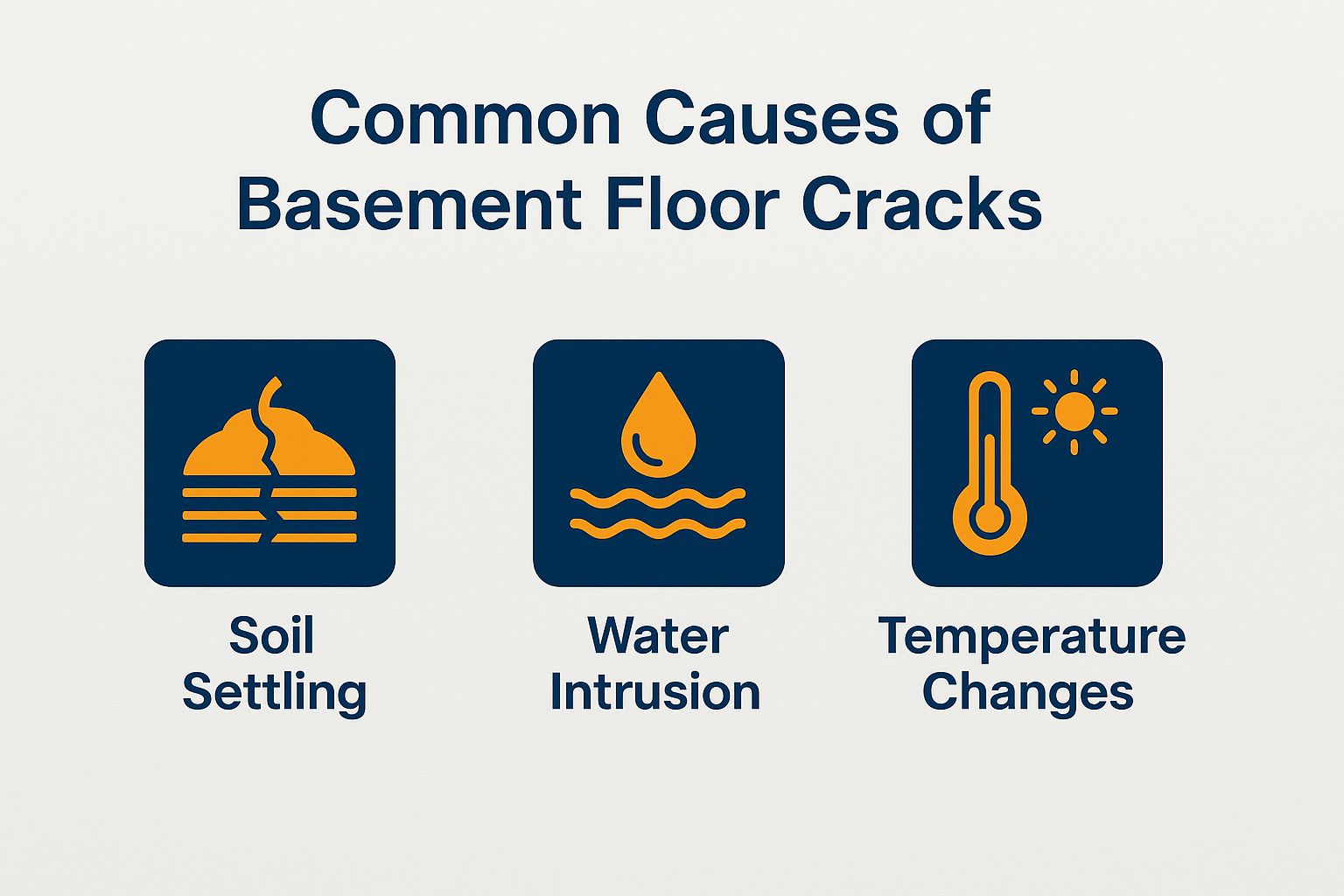
Soil Settling
Soil settlement is one of the primary causes of cracks in basement floors, often resulting in significant foundation repair and stability challenges. In Milwaukee, approximately 30% of homes experience some form of settling due to fluctuations in moisture levels. When soil moisture increases or decreases, the ground can expand or contract, leading to uneven support for foundations.
Homeowners should schedule foundation inspections every two to three years. Maintaining consistent soil moisture around the home is beneficial, which can be achieved through techniques such as:
- Installing gutters to direct rainwater away from the foundation, thus addressing gutter maintenance issues
- Using landscaping to create effective drainage paths
Implementing these measures helps safeguard basements from hydrostatic pressure.
Water Intrusion
Water intrusion is a major cause of basement cracks. Hydrostatic pressure makes it worse. To address this issue, homeowners are advised to consider the installation of a sump pump, which actively removes water from the basement area, thereby preventing pooling and the associated pressure buildup.
Regular maintenance of gutters is essential; clean gutters and downspouts effectively direct water away from the foundation, thereby reducing the risk of water accumulation.
- Regularly clean gutters and downspouts.
- For a more permanent solution, homeowners may also consider grading the landscaping to slope away from the house. This straightforward action can significantly mitigate water intrusion resulting from rainfall.
By implementing these measures, homeowners can effectively safeguard their basements from the detrimental effects of hydrostatic pressure.
Temperature Changes
Temperature fluctuations, especially freeze-thaw cycles, can crack basement concrete. Monitoring temperatures is key during colder months.
Implementing several proactive measures can be beneficial:
- Apply a high-quality protective coating to the concrete to help seal it against moisture intrusion.
- Incorporate insulation around the perimeter of the basement to mitigate temperature fluctuations.
- Ensure proper drainage away from the foundation to prevent water accumulation, which can exacerbate freezing conditions.
- Regularly check for plumbing leaks that may exacerbate the problem.
By adopting these strategies, including monitoring trees and addressing plumbing leaks, one can effectively minimize the risk of cracking in basement concrete.
Types of Basement Floor Cracks
Knowing the type of crack helps determine the right repair method. This could include polyurethane injections or other techniques and assessing potential risks.
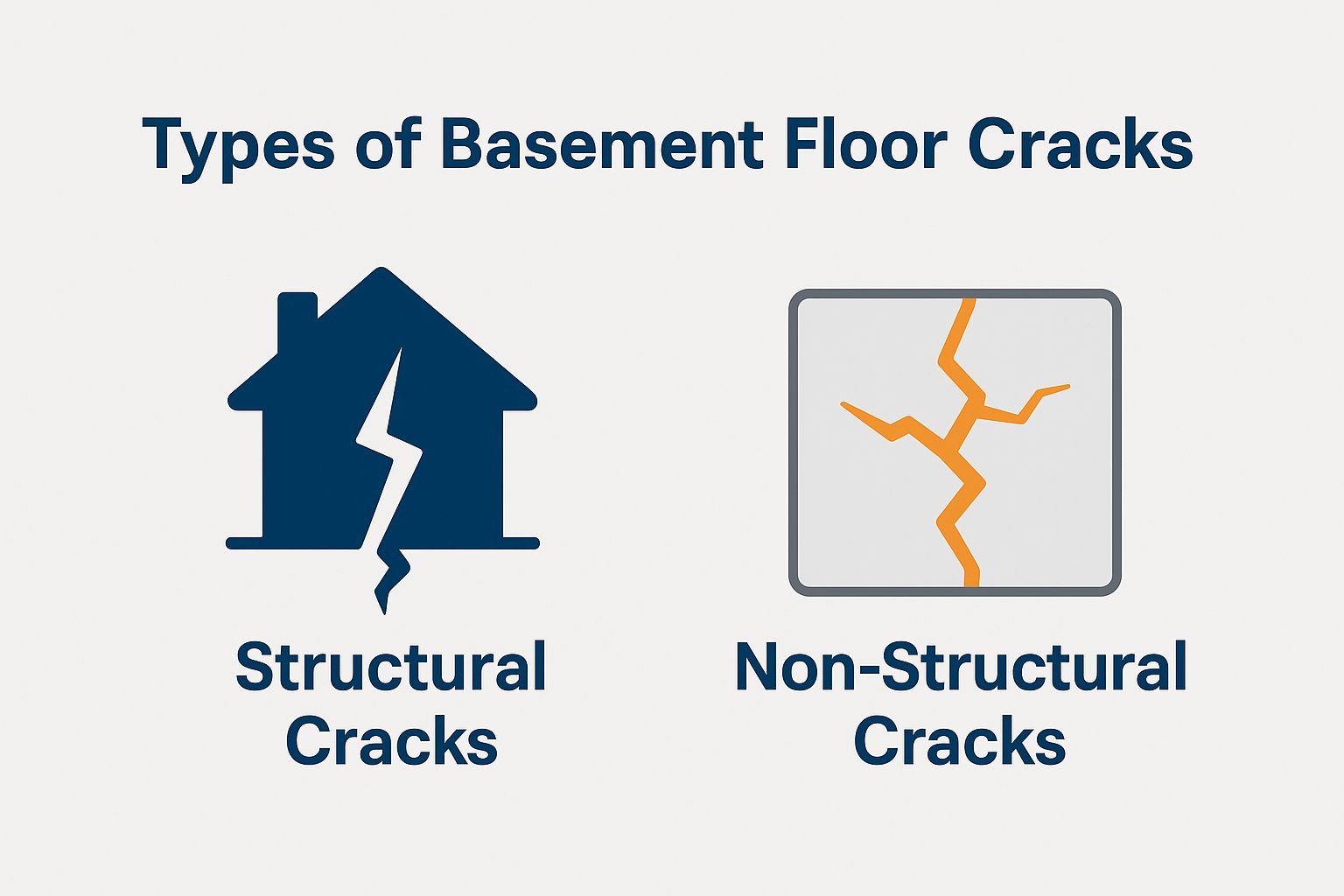
Structural Cracks
Structural cracks are indicative of significant issues that can compromise the integrity of a foundation and necessitate immediate attention from qualified repair contractors.
These cracks appear as vertical or horizontal fissures. They often come with sagging floors or misaligned doors.
To ensure safety, it is advisable to schedule a professional evaluation to assess the severity of the situation.
Here are some common repair methods:
- Epoxy crack injection, which effectively fills voids and prevents water intrusion.
- Underpinning, which serves to strengthen weakened foundations.
- Reinforcements such as carbon fiber strips, which may be utilized to stabilize affected areas and mitigate tripping hazards.
Timely intervention is essential to prevent further damage and escalating repair costs.
Non-Structural Cracks
Non-structural cracks, such as hairline fractures, generally present minimal risk; however, they may indicate underlying issues such as concrete quality problems if not addressed in a timely manner.
To manage these cracks effectively, it is advisable to implement a regular monitoring routine. Regular monitoring can help manage these cracks effectively. Inspecting the walls or foundations every few months for any changes in size or quantity is essential.
If there is noticeable progression, the application of a concrete resurfacing compound is recommended to fill and seal minor cracks. If you notice any progression, use a concrete resurfacing compound to fill and seal minor cracks. Well-regarded products such as Quikrete Concrete Resurfacer or Sakrete Top `N Bond can help restore a smooth surface.
Addressing these cracks promptly is crucial in order to prevent more extensive and costly repairs in the future, thereby preserving both the aesthetic appeal and structural integrity of the property.
How to Diagnose the Cause
Diagnosing basement floor cracks requires careful observation and often a professional evaluation for proper treatment.
Commence with a visual inspection of the cracks, paying attention to their size and direction. Vertical cracks may indicate settling issues, while horizontal cracks could suggest the presence of water pressure.
Subsequently, assess for signs of water intrusion, such as moisture stains or efflorescence on the walls. It is also imperative to evaluate the soil conditions surrounding the foundation; loose or expansive soils may lead to structural shifts.
If there is uncertainty regarding the findings, it is advisable to engage a structural engineer who can provide a thorough assessment, particularly for structural damage, and recommend suitable repairs.
Repairing Basement Floor Cracks
Repairing basement floor cracks includes several methods. These range from simple DIY solutions to complex interventions by professionals, especially for larger cracks.
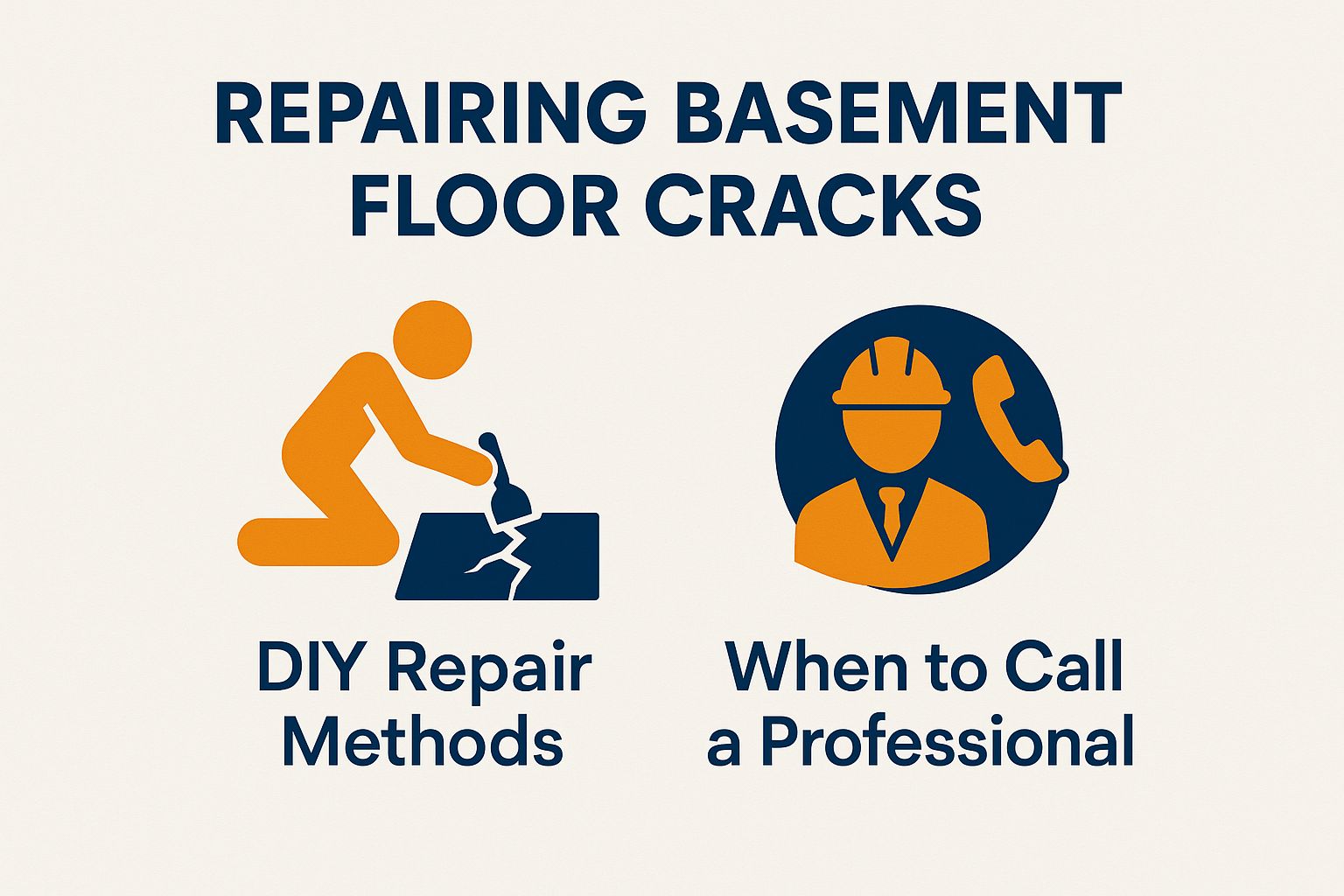
DIY Repair Methods
Homeowners can effectively address minor basement floor cracks through cost-effective DIY methods like sealing basement cracks and concrete resurfacing that contribute to overall home maintenance.
Start by gathering supplies like hydraulic cement, a trowel, a wire brush, and water.
The process starts with cleaning the cracks using the wire brush to remove any loose debris and dust. Subsequently, the hydraulic cement should be mixed according to the instructions provided on the package.
Using the trowel, apply the cement into the cracks, ensuring it is pressed firmly to eliminate any air pockets. Smooth the surface as needed, and allow the cement to cure, which typically takes 1 to 2 hours.
This procedure repairs cracks and helps prevent moisture issues, enhancing the basement’s durability.
When to Hire a Professional
Certain circumstances necessitate professional intervention for addressing cracks in basement floors, particularly when structural issues are involved.
Look for these signs that show you need professional help:
- widening cracks greater than 1/4 inch,
- the presence of mold growth,
- uneven floors where water may accumulate.
Furthermore, if you observe that doors or windows are sticking or do not close properly, this may indicate a more significant underlying issue. Act quickly to prevent costly repairs later. Professional crack repair services can cost between $500 and $3,000, depending on the damage.
It is advisable to schedule an inspection to mitigate the risk of further damage to your property.
Preventive Measures
Preventive measures are essential for keeping basements crack-free. They ensure long-term structural integrity through adequate drainage systems and humidity control.
Start with proper landscape grading to direct water away from the foundation. A slope of at least 1 inch per foot for the first 6 feet is best.
Humidity control is vital. Use dehumidifiers, especially in damp climates. Monitor humidity levels to keep them between 30-50%.
Inspect every six months for water intrusion, cracks, or mold.
Detect issues early to enable proactive repairs. This action helps prevent costly damage.
