A well-designed crawl space drainage system is essential for controlling moisture. It protects your home from structural damage, Poor waterproofing can cause significant mold growth. This can harm your indoor air quality. In this guide, we’ll explore the importance of drainage systems, the types available, and how to choose and maintain the right one, ensuring your foundation stays dry and secure.
Importance of Foundation Drainage Systems
Effective drainage systems play a crucial role in preventing foundation issues, humidity levels imbalances, and costly repairs, thereby safeguarding the structural integrity of your home.
Statistics indicate that up to 30% of homes may face moisture problems. High humidity in crawl spaces often results from inadequate drainage. Such conditions can lead to significant complications, including wood rot and pest infestations, which can adversely affect the overall value of the property.
To reduce these risks, ensure your drainage system includes the following elements:
- Proper ventilation issues assessment to ensure air circulation
- A sump pump for effective water removal
- Properly sloped gutters that direct water away from the foundation
- Regular inspections of drainage pathways to maintain functionality
Investing in landscaping solutions like French drains can help divert excess water. This enhances yard drainage and protects against moisture damage.
Types of Crawl Space Drainage Systems
Selecting the appropriate drainage system is essential for effective moisture control in crawl spaces, as there are various options available to address specific requirements.
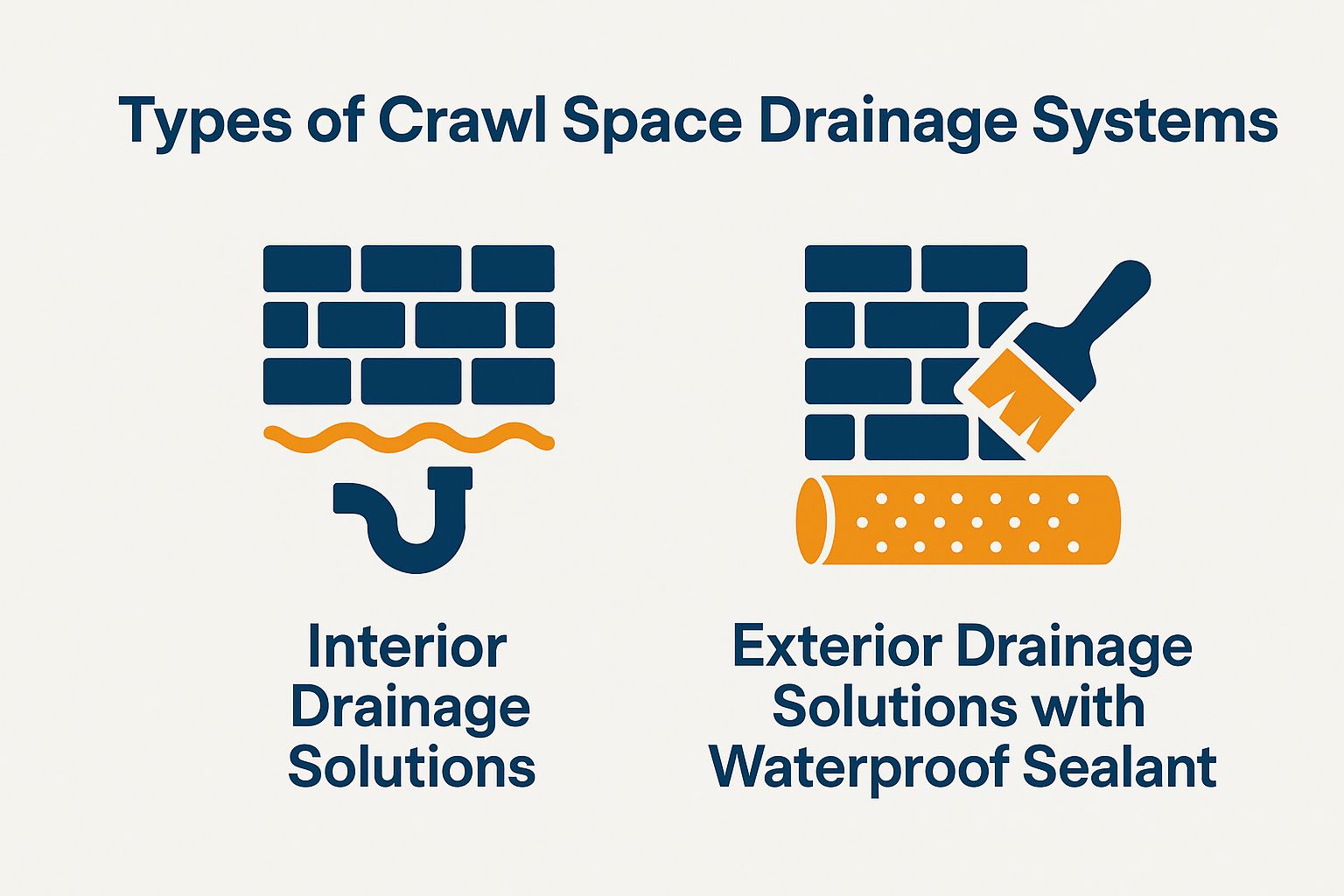
Interior Drainage Solutions
Interior drainage solutions typically encompass sump pumps and perforated pipes to effectively manage water removal from crawl spaces.
To establish an interior drainage system, one should begin by excavating the perimeter of the crawl space to install French drains. These drains consist of a trench filled with gravel, housing a perforated pipe designed to collect water.
Subsequently, it is advisable to position a sump pump at the lowest point to actively eliminate accumulated water. A high-quality sump pump, such as the Zoeller M53, is particularly effective for this application.
Regular inspections and maintenance are crucial for optimal moisture control. This helps lower humidity levels and reduces the risk of mold, termites, and rodents. It is recommended to maintain humidity levels below 60% to safeguard the integrity of the home.
Exterior Drainage Solutions with Waterproof Sealant
Exterior drainage systems, including French drains and downspouts, serve to redirect surface water away from the foundation of a structure, thereby preventing moisture accumulation.
To implement these systems effectively, it is essential to begin by assessing the grading of your landscape. The ground should slope away from the home, with a recommended fall of at least 2% over the first 10 feet.
Installing a French drain-essentially a trench filled with gravel and a perforated pipe-allows for the collection of water in low-lying areas. Additionally, it is important to ensure that downspouts extend a minimum of 6 feet from the foundation to prevent water pooling around it.
Utilizing tools such as a level and a trenching shovel can facilitate proper installation, thereby safeguarding the foundation from potential water damage.
Signs of Water Problems in Your Crawl Space
Maintaining vigilance regarding indicators of moisture issues and efflorescence in your crawl space is essential, as it can prevent extensive damage and reduce the likelihood of costly repairs.
How to Identify Moisture Issues
Homeowners must identify visible signs of moisture. Look for efflorescence, mold growth, or insulation damage, as these indicate underlying issues.
Use a hygrometer to monitor indoor humidity levels. The optimal range is between 30% and 50%.
If humidity exceeds this range, consider using a dehumidifier or improving ventilation.
Inspect your property every six months. Focus on basements, attics, and areas around windows for musty odors or water stains.
Establish a moisture management plan to prevent moisture-related issues. This helps maintain a healthy home environment.
The Risks of Ignoring Moisture Control
Ignoring moisture management in crawl spaces can lead to serious problems. These include foundation cracks and pest infestations, such as termites or rodents.
Moisture issues can worsen if ignored. This may lead to structural damage and costly repairs.
Prevent these problems by conducting regular inspections. Consider using dehumidifiers or encapsulation systems.
Selecting the Best Drainage System for Moisture Buildup
Choosing the right drainage system requires careful consideration of several factors. These include the crawl space conditions and your budget.

Factors to Consider
When selecting a drainage system, consider these key factors: soil drainage capacity, humidity levels, insulation condition, and plumbing issues.
Next, check humidity levels with a hygrometer. If excess moisture is present, you may need to install a dehumidifier.
Additionally, inspect the insulation; if it is found to be moist or deteriorating, it may be prudent to consider a drainage system specifically designed to mitigate condensation, such as a perimeter drain supplemented by a sump pump and possibly a vapor barrier.
This tailored approach ensures that the selected drainage system effectively addresses the unique conditions present within your crawl space.
Cost Overview
Crawl space drainage solution costs vary widely. DIY options can be under $500, while professional installations may exceed $5,000.
For a cost-effective approach, individuals may consider installing a sump pump, which can be acquired for as little as $200. When combined with gravel and drainage pipes, the total DIY expenses may amount to approximately $500.
Conversely, engaging professional services for a comprehensive waterproofing system can range from $2,000 to $5,000, contingent upon the size and complexity of the home. This service typically encompasses excavation, the installation of a drainage system, and sealing.
Don’t forget ongoing maintenance costs. These can add an extra $100 to $300 each year for pump inspections and cleaning.
How to Install a Drainage System
Installing a crawl space drainage system involves several key steps. These ensure effective moisture management, air circulation, and long-term performance.
Preparation Steps for Dehumidifier Installation
Before installation, inspect the crawl space thoroughly. Remove any debris that may block drainage solutions. Additionally, it is important to evaluate the existing drainage system by checking for any leaks or blockages.
Use a moisture meter to check humidity levels. Excess moisture can signal underlying issues. Look for signs of pests or mold, which thrive in damp conditions.
A plumber’s snake can help remove minor clogs. For serious issues, hire a professional for a thorough inspection.
This preparatory work lays a solid foundation for effective drainage solutions, including waterproofing your crawl space.
Step-by-Step Installation Guide
To ensure a successful installation of a sump pump and interior drainage system in your crawl space, please adhere to the following step-by-step instructions:
- Initiate the process by excavating a sump pit at the lowest point of your crawl space, typically measuring about 2 feet in depth and 18 inches in width. This task may require approximately 2 hours to complete.
- Subsequently, install the sump pump within the pit, ensuring that it is level and properly connected to a power source.
- Next, run a PVC drainage line from the pump to the exterior, directing water away from the foundation of your home.
- Utilize a reliable sealant for all joints and verify compliance with local building codes.
Expect the entire installation process to take about 3 to 5 hours.
Maintenance and Upkeep
Regular maintenance is key to keeping your crawl space drainage system effective.
Regular Inspection Tips
Inspect your crawl space at least twice a year to catch moisture issues early, like water intrusion or efflorescence.
Begin by examining for visible signs of mold, which may manifest as black, green, or white spots on various surfaces, and consider using waterproofing solutions like Triad Waterproofing.
Next, assess the effectiveness of drainage by observing whether water accumulates during heavy rainfall; it is essential to ensure that gutters are clean and that downspouts and French drains direct water away from the foundation.
Monitor humidity levels using a hygrometer, aiming to maintain levels below 60%. Regular inspections of insulation for moisture or decay are also critical, as is ensuring that vents remain unobstructed to facilitate adequate air circulation, which is crucial for preventing high humidity and wood rot.
Following these steps helps maintain a healthy crawl space and prevents costly repairs later.
Common Issues and Solutions in Crawl Space Maintenance
Common crawl space drainage issues include clogs, pump failures, and inefficient water removal. Solutions include using a dehumidifier and vapor barrier to manage moisture.
To address these concerns, conduct regular inspections and clean the sump pump filters every six months to ensure optimal functionality. Clearing debris from drainage lines is essential, and utilizing a high-pressure hose may assist in removing stubborn blockages.
Additionally, investing in a waterproofing membrane can significantly aid in managing water intrusion. Monitoring the operation of the sump pump can help prevent failures; installing a sump pump alarm is a prudent measure to alert you of any potential issues.
Implement these proactive measures to boost your drainage system’s efficiency and prevent major problems.
Final Thoughts on Foundation Protection
A good drainage solution is crucial for protecting your home’s foundation from water damage, especially in humid areas like Gaithersburg.
Begin by assessing your property’s drainage patterns. Look for problem areas, like puddling around the foundation, and consider HVAC systems to improve airflow.
It is advisable to install gutter systems designed to redirect rainwater away from your home, and consider implementing downspout extensions for enhanced protection, as well as applying DRYLOK for an additional waterproofing layer.
If you have significant runoff, French drains can efficiently channel water underground.
Using tools like a soil moisture meter helps you keep track of water levels in your yard.
Regularly check your drainage systems. Consult with professionals to make adjustments and prevent issues like termites and wood rot.
