Choosing the right sump pump is crucial for protecting your home from water damage. Whether you opt for a robust submersible sump, a reliable pedestal sump, or a powerful battery backup system like the UltraSump 4, understanding the different types of sump pumps can make all the difference. This article explores various sump pump options and guides you in choosing the perfect fit for your needs.
What is a Sump Pump?
A sump pump is a device that is installed in a sump pit, specifically designed to remove accumulated water and prevent flooding in basements or crawl spaces. It forms the core of a comprehensive sump pump system essential for home protection against rising water.
- To properly install a sump pump, one should begin by excavating a sump pit at the lowest point of the basement. Expert recommendations from professional plumbers can ensure correct sump basin placement for optimal performance.
- Subsequently, the pump must be connected to a power source, ensuring compliance with local electrical codes.
- Most sump pumps are equipped with a float switch that monitors water levels; when the water reaches a predetermined height, the pump is activated.
Consider a backup power supply to keep the pump running during power outages.
Regular maintenance is essential. Clean the sump pit and test the pump monthly to keep it running smoothly and prolong its lifespan.
Why You Need a Sump Pump
The installation of a sump pump significantly mitigates the risk of flooding in residential properties, with statistics indicating that over 60% of American homes are susceptible to some form of water damage. A sump pump is crucial for safeguarding homes in areas with heavy rainfall or flooding.
Sump pumps remove excess water from basements or crawl spaces. Installation costs typically range from $500 to $1,500. Consulting with a waterproofing contractor for insights on cost-effective options and emergency services for flooding protection can provide additional insights.
If there is water damage, repair costs can quickly exceed $25,000.
When selecting an appropriate sump pump, it is advisable to consider features such as:
- A backup battery system to ensure operation during power outages,
- A float switch for automatic activation, and
- A durable, corrosion-resistant design.
Regular maintenance checks are also crucial to ensure optimal performance.
Types of Sump Pumps
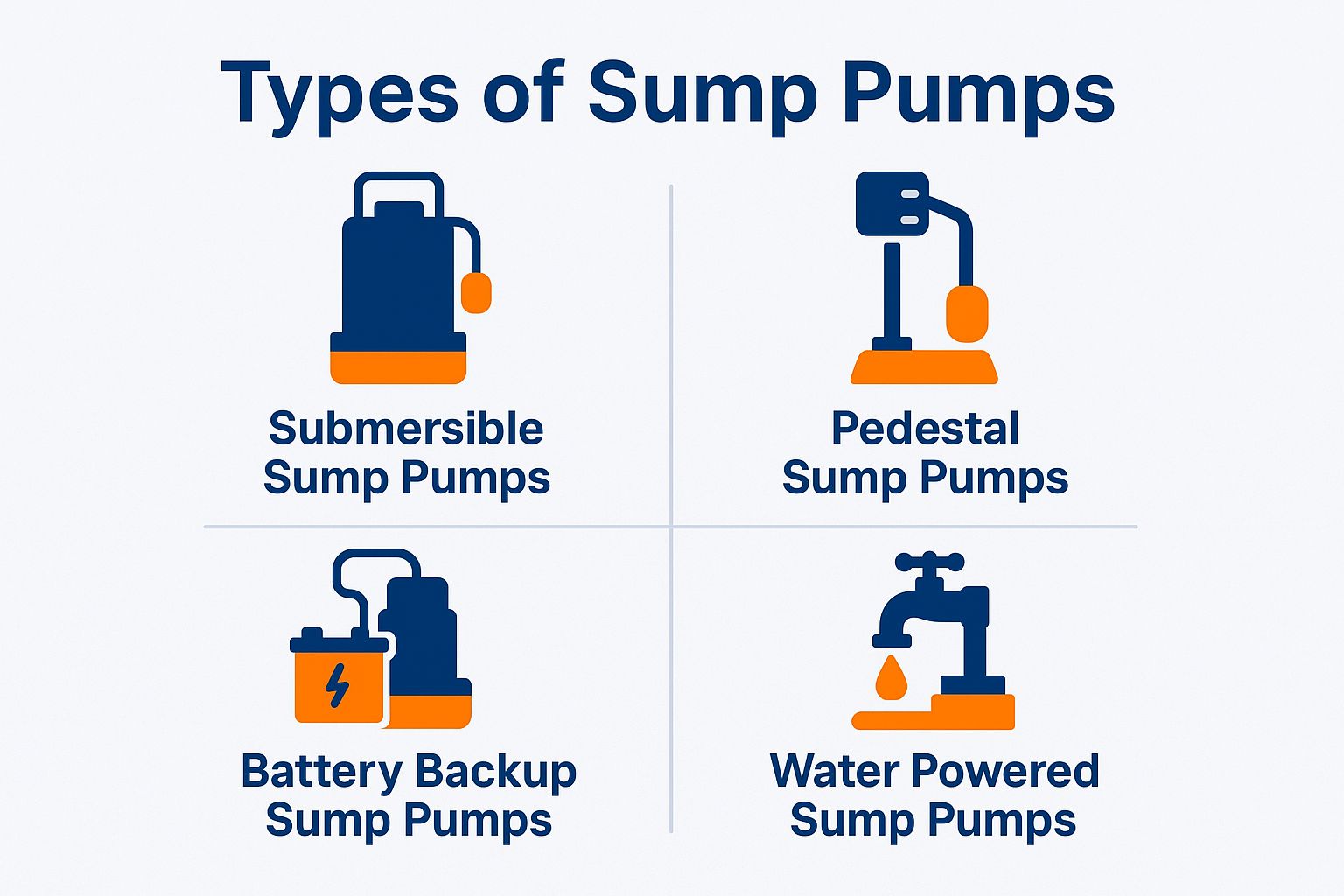
A thorough understanding of the different types of sump pumps enables homeowners to select the most suitable solution tailored to their specific needs and environmental conditions.
Submersible Sump Pumps
Submersible sump pumps work efficiently while submerged in water, producing less noise than other types. These pumps have a sealed motor for quiet underwater operation and effective management of high water levels.
Many models are equipped with built-in float switches for automatic operation, as well as thermoplastic shells that offer resistance to corrosion, thereby enhancing their longevity.
For example, the Zoeller M53 is equipped with a powerful motor capable of handling 43 gallons per minute, making it particularly suitable for basements that are susceptible to flooding. Regular maintenance, including the inspection of the float switch and the cleaning of the intake screen, is essential to ensure optimal performance throughout the year.
Pedestal Sump Pumps
Pedestal sump pumps have a motor above the sump pit for easy maintenance. They are generally noisier than submersible pumps. Despite their noise levels, these pumps are a cost-effective option for homes seeking affordable flooding protection.
Maintenance procedures are straightforward, as the motor and switch are easily accessible without the need to remove the entire pump from the pit. It is important to remain vigilant regarding common mechanical issues, such as float switch malfunctions or blockages in the discharge pipe.
To tackle these challenges, use adjustable float switches for better reliability. Regular inspections will help remove any debris.
The Zoeller 98 is known for its efficiency and reliability. The Wayne CDU980E operates quietly, but it is a submersible option.
Battery Backup Sump Pumps and Emergency Repairs
Battery backup sump pumps protect your home during electrical outages. They ensure operation continues when primary power sources fail.
Average installation costs for these systems range from $300 to $1,200. This varies based on the model and installation complexity.
Check the battery every six months and replace it every three to five years for reliability.
Consider models with built-in alarms. They alert you to primary pump failure or low battery power, providing peace of mind during severe weather.
Water Powered Sump Pumps
Water-powered sump pumps use municipal water pressure for operation. They offer a cost-effective solution for homeowners seeking sustainable alternatives.
The installation process is relatively straightforward; it involves connecting the unit to existing plumbing and ensuring that it is positioned below the water table.
Water-powered sump pumps have minimal operational costs since they don’t require electricity. They also have a smaller environmental footprint, ideal for areas with unreliable electric pumps during outages.
For example, a typical water-powered sump pump is priced at approximately $200 and can have a lifespan exceeding a decade with basic maintenance.
Essential Features to Consider
When selecting a sump pump, consider features like horsepower, capacity, and material durability. These factors affect the pump’s effectiveness and longevity.
Horsepower and Capacity
The horsepower of a sump pump indicates its water-moving capacity.
Typically, a 1/2 HP pump is capable of moving approximately 2,000 gallons per hour, which is adequate for most residential applications.
In flood-prone areas, consider upgrading to a 3/4 HP pump. It can manage around 3,000 gallons per hour. This option is particularly advantageous in regions prone to heavy rainfall or possessing inadequate drainage.
Assess the water levels in your basement when choosing the right pump. If the water level frequently exceeds 18 inches, a 1 HP pump, which can discharge over 4,000 gallons per hour, should be considered.
Additionally, investing in a pump with built-in alarms, like the Zoeller M53, enhances safety by alerting you to potential malfunctions.
Material and Durability
Choose a sump pump made from high-quality materials, like corrosion-resistant housing. This significantly improves its longevity and reliability.
When evaluating materials for your sump pump, both plastic and metal materials have their advantages when choosing a sump pump. Plastic pumps are typically lighter, which facilitates easier installation, and they possess corrosion resistance, making them well-suited for damp environments; however, they may not withstand significant impact.
In contrast, metal pumps provide superior durability and performance, especially in challenging conditions, although they are prone to rust if not properly treated.
Regular maintenance, including inspecting for leaks and cleaning filters, will prolong the lifespan of either option. Ultimately, investing in a high-quality model provides substantial long-term benefits.
Choosing the Best Sump Pump
Evaluate your needs and budget to choose the right sump pump. This ensures you invest wisely in a system that offers reliable flood protection.
Assessing Your Needs
Evaluate your home’s flooding risk by considering local climate, basement design, and existing drainage systems before selecting a sump pump.
Ask yourself these critical questions:
Do you reside in a flood-prone area? What is the vulnerability of your basement to water accumulation, particularly following heavy rainfall?
Check your drainage system. Ensure gutters function well and direct water away from your foundation. Carefully considering these factors will assist in guiding you toward the appropriate sump pump selection.
Consider a submersible pump for deeper basements. Pedestal pumps work better for shallower areas, thus ensuring reliability based on your specific requirements.
Budgeting for Your Sump Pump
Sump pumps range from about $50 for basic models to over $300 for advanced systems. Therefore, careful budget considerations are essential for homeowners.
Consider installation costs as well. Hiring a professional typically adds $200 to $500 to your total costs, depending on the complexity of the plumbing involved.
Ongoing maintenance costs range from $100 to $200 annually for checking functionality and cleaning the sump pit. It is also prudent to consider the long-term savings associated with preventing potential water damage. A sump pump can avert costly repairs, thereby making the initial investment a worthwhile consideration.
Tips for Installation and Maintenance
Proper installation and regular maintenance are essential for maximizing your sump pump’s lifespan and reliability.
Professional vs. DIY Installation
Choosing between professional and DIY installation affects your sump pump’s efficiency. Professional installation services typically range from $300 to $600.
Doing it yourself can save money but requires time. Expect to spend 4 to 8 hours based on your skill level.
You will need tools like a drill, PVC pipe cutter, and level for the process. To minimize the risk of errors, it is advisable to follow clear instructions and consult tutorial videos that are specific to the sump pump model being installed.
A mistake in DIY installation can lead to expensive water damage later. Therefore, individuals should carefully assess their comfort level with plumbing tasks relative to the potential risks involved.
Maintenance Practices for Your Sump Pump
Regular maintenance, including monthly inspections and annual checks, can extend your sump pump’s life by up to 50%. This enhances reliability.
Use a seasonal checklist for effective maintenance of your sump pump. During the spring and fall, it is important to inspect the discharge pipe for potential clogs and to ensure proper drainage away from your residence.
Check the pump’s power source and test the float switch monthly by pouring water into the sump pit.
Install a sump pump alarm to alert you of potential failures and prevent flooding and costly repairs.
If the sump pump runs continuously, check for a stuck float switch. This issue can often be fixed without professional help. In cases of emergency, a battery backup pump is a reliable option.
