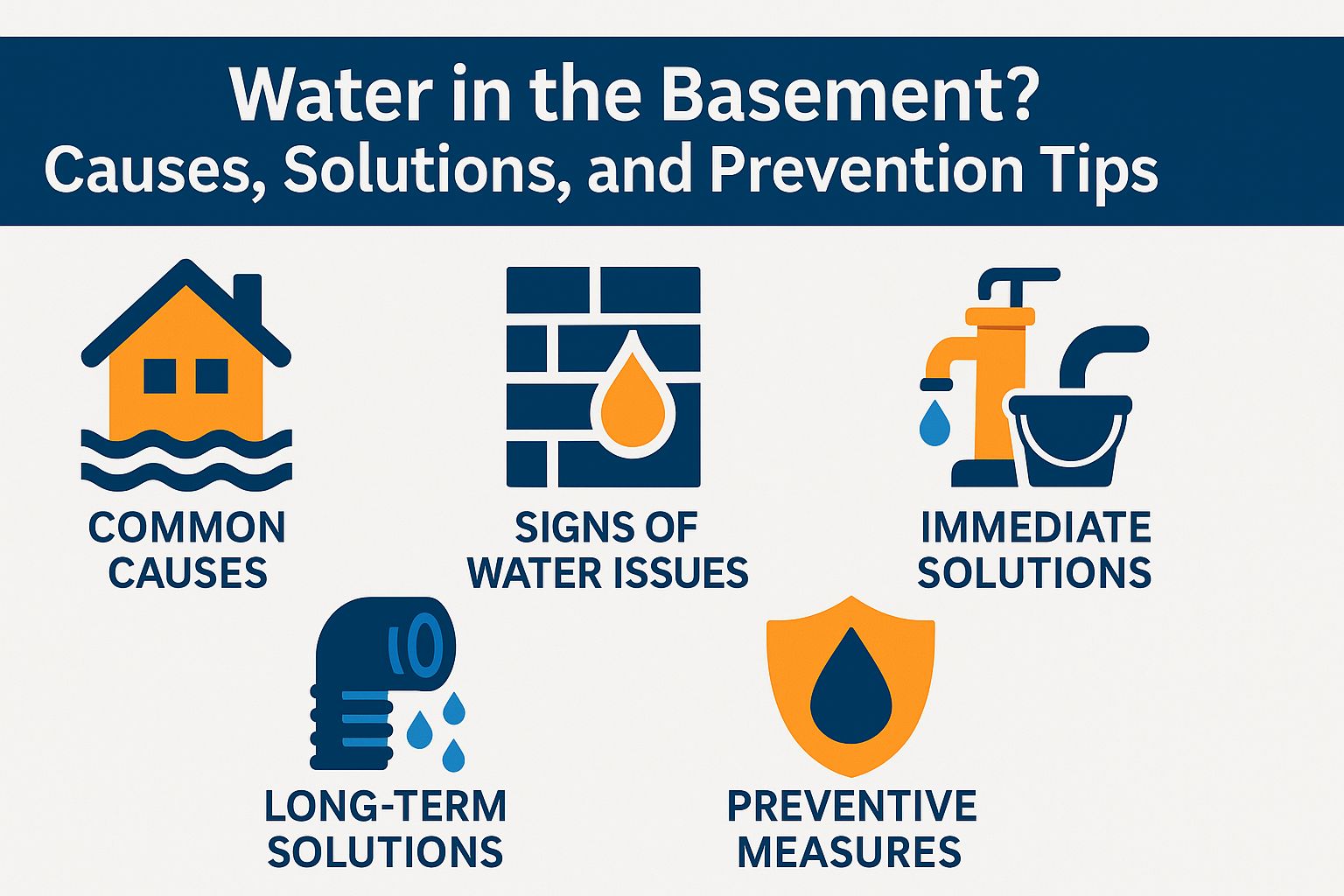
Finding water in your basement can cause serious damage, from leaks to mold. Companies like Rainbow Restoration, Basement Systems, and SERVPRO offer vital solutions for basement flooding issues. This article explores common causes, effective solutions, and prevention tips to keep your home dry and safe. Let’s prevent that basement from becoming a damp nightmare!
Common Causes of Water in the Basement
Identifying causes of water intrusion, like leaks and cracks, is vital for implementing effective solutions and preventing future occurrences.
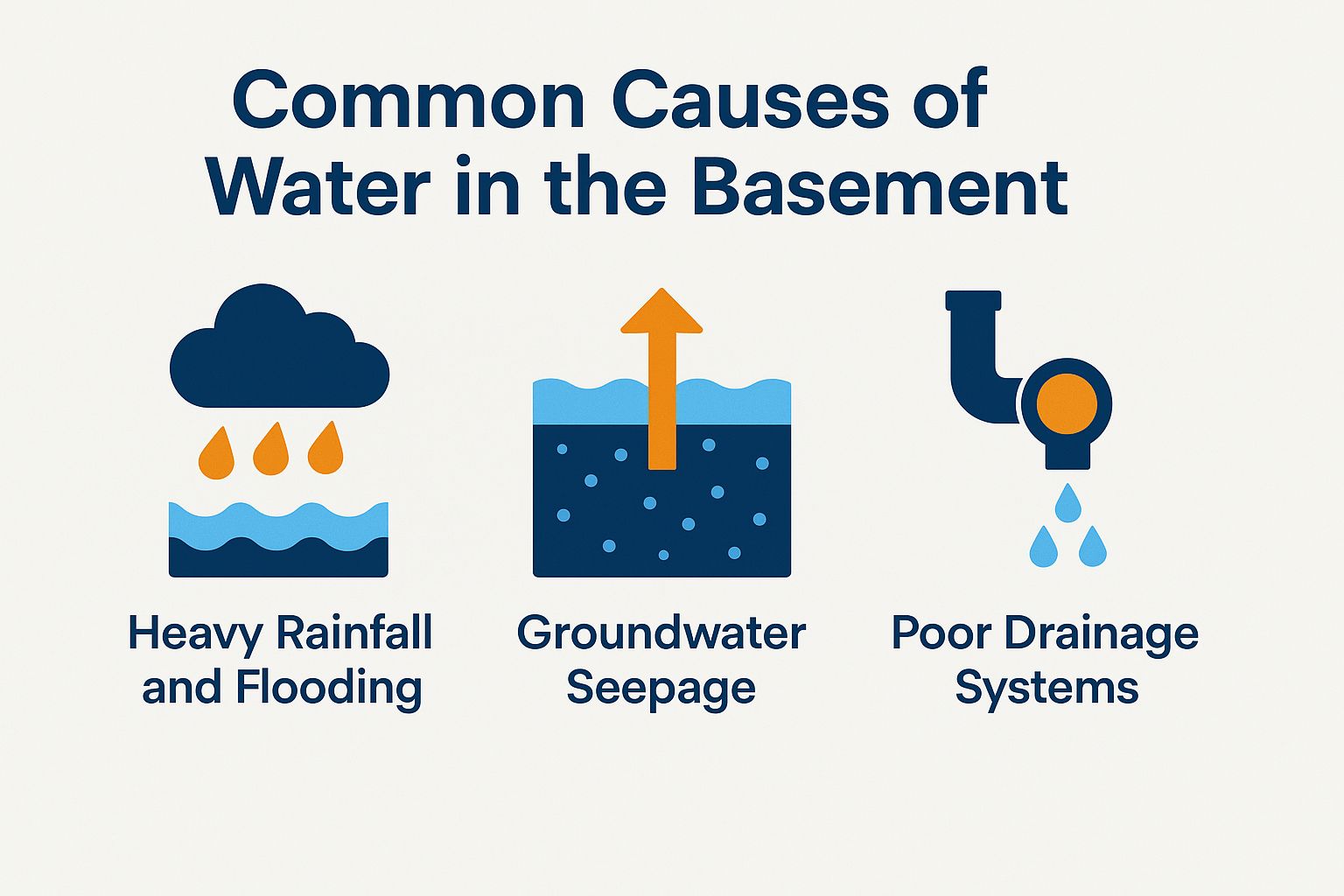
Heavy Rainfall and Flooding
Heavy rainfall has the potential to overwhelm drainage systems, leading to standing water, basement flooding, and subsequent water damage, particularly in low-lying areas.
Homeowners should invest in rainfall tracking tools like Weather Underground or local meteorological applications. These resources offer real-time updates and forecasts, enabling homeowners to take proactive measures.
Installing a sump pump can help manage basement water levels effectively. Regular maintenance, including cleaning gutters and downspouts, is crucial in preventing water from pooling around the foundation.
Creating a rain garden can absorb excess water and enhance drainage while providing an aesthetically pleasing and environmentally friendly solution. Implementing these strategies can significantly reduce the risk of flooding.
Groundwater Seepage
Groundwater seepage happens when pressure builds, causing water to infiltrate through foundation cracks and resulting in moisture problems that require immediate attention.
Homeowners should install an interior drainage system to capture water before it enters the basement. This system can be further enhanced by applying waterproofing sealants to the foundation walls, which serve as a barrier against moisture.
Grading the soil to slope away from the foundation reduces pressure effectively. Employing a combination of these methods not only prevents water intrusion but also contributes to the longevity of the basement and increases the overall value of the property.
Poor Drainage Systems
Poor drainage systems, like misaligned gutters, worsen flooding issues, including improperly positioned gutters and downspouts, can significantly exacerbate water-related issues such as basement flooding and water leaks during periods of rainfall.
Start by checking the placement of your gutters for better drainage. A slope of at least 1 inch for every 10 feet of run is recommended to facilitate the proper flow of water.
Utilizing tools such as the Drainage Calculator from Home Depot can assist in effectively assessing yard grading. It is also prudent to position downspouts at least 6 feet away from the foundation to ensure water is redirected further away from the structure.
Clean gutters and downspouts at least twice a year to prevent blockages that can result in water pooling and subsequent damage.
Signs of Water Issues
Identifying the early signs of water issues can save homeowners from incurring significant damage, costly restoration procedures, and the need for emergency services.
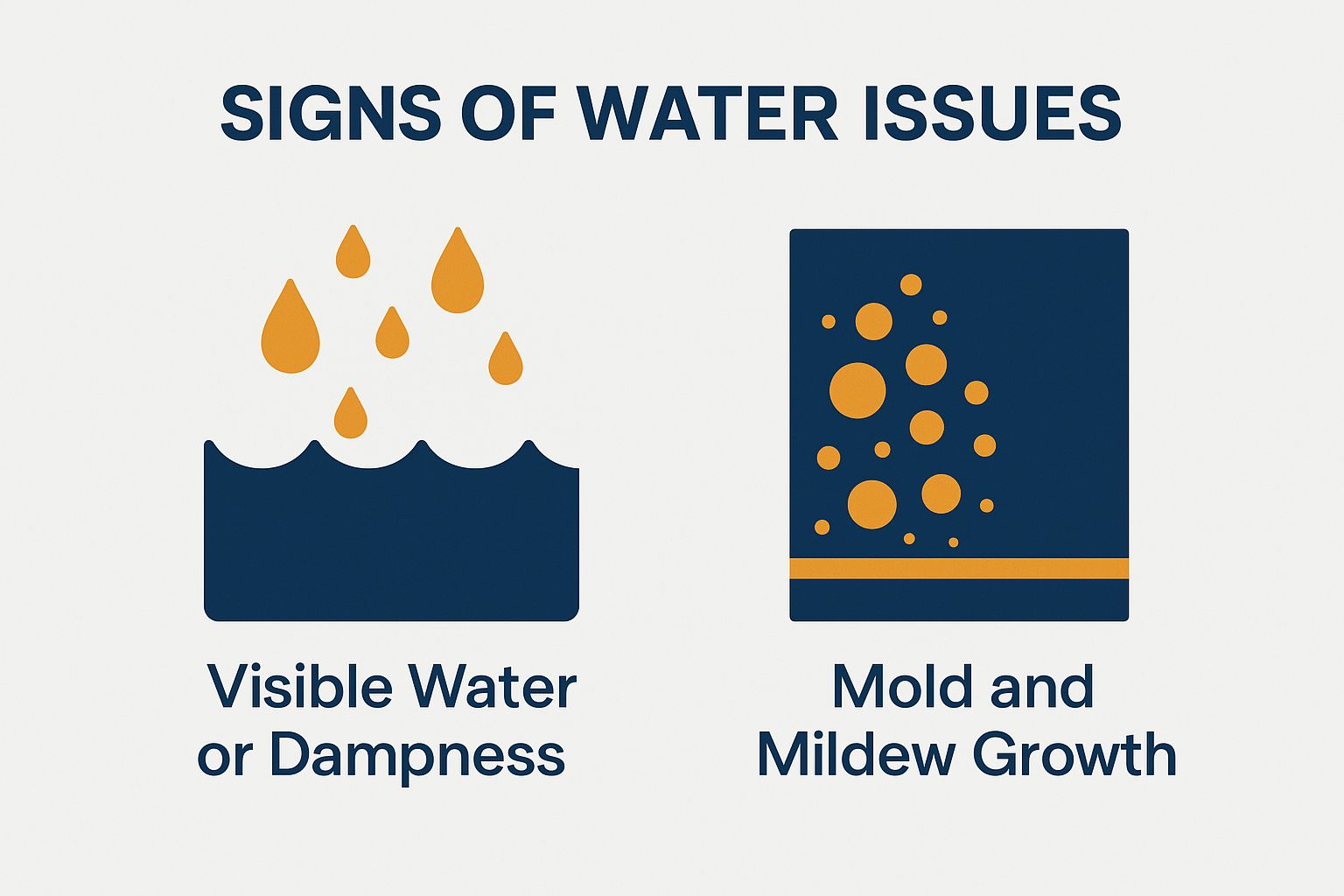
Visible Water or Dampness
Water or dampness on basement walls clearly indicates water intrusion, signaling the need for immediate action such as water damage restoration and appropriate cleaning techniques by homeowners.
Use a moisture meter, like the Extech MO257, to measure dampness accurately, which provides precise measurements to differentiate between minor surface dampness and more significant moisture issues.
Homeowners should also inspect the walls for discoloration or peeling paint, as these can indicate long-term water-related problems.
Another effective assessment method is the plastic sheet test. Tape a piece of clear plastic over a damp area for 24 hours. Check for condensation, which indicates moisture is seeping through.
Addressing these issues promptly prevents costly repairs later.
Mold and Mildew Growth
The presence of mold and mildew typically indicates prolonged exposure to moisture, which can result in both health issues and structural damage. To address mold concerns, it is important to inspect damp areas like basements and bathrooms for visible mold signs.
Use Concrobium Mold Control to clean affected surfaces. It effectively eliminates mold without harsh chemicals. The process involves:
- Spraying the area until damp.
- Scrubbing with a brush.
- Allowing it to dry.
If mold covers more than 10 square feet, contact professionals like SERVPRO. They can assess the situation and carry out safe remediation. Prompt action is crucial to prevent further damage and protect health.
Immediate Solutions
Address water issues promptly to minimize damage and restore basement integrity.
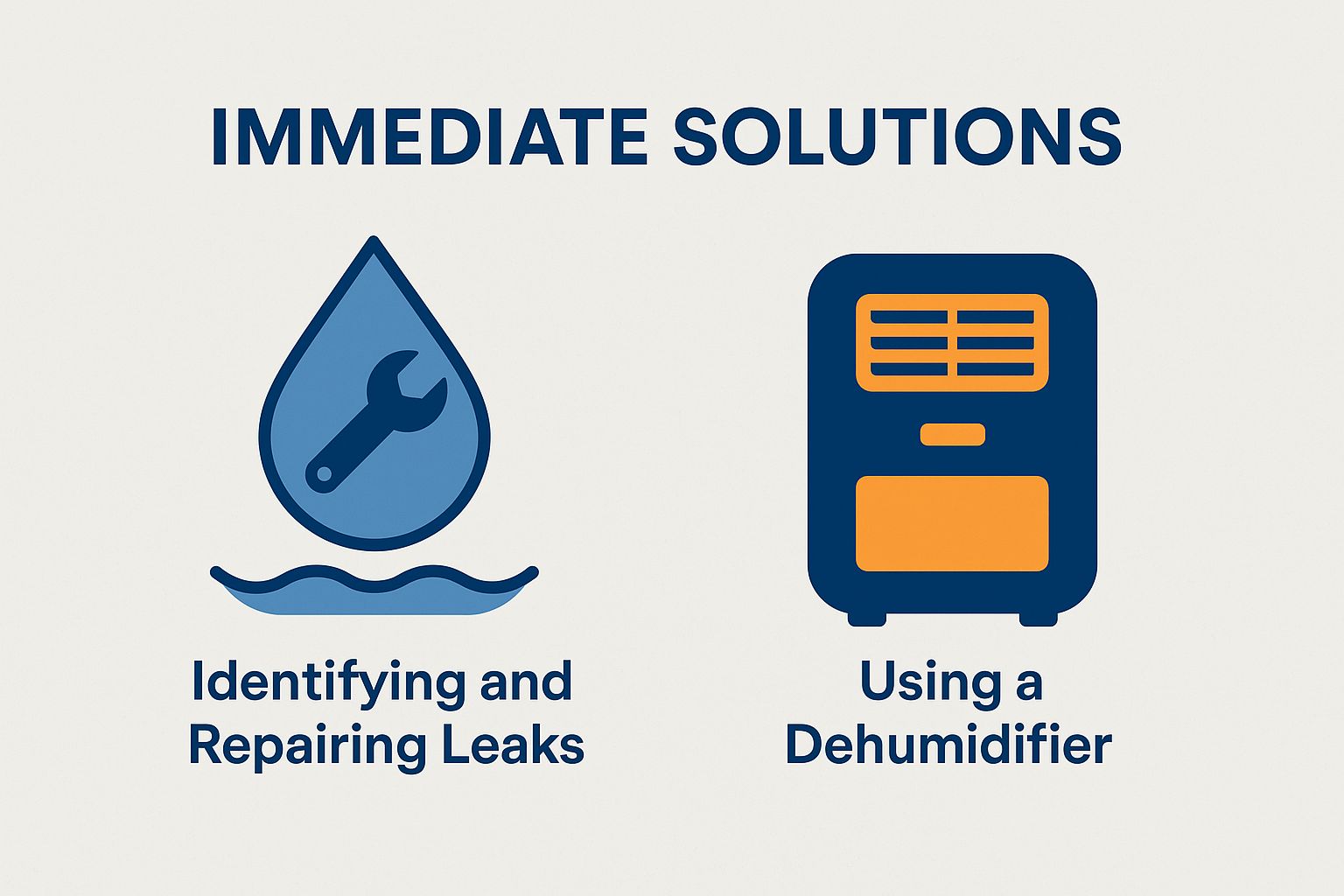
Identifying and Repairing Leaks
Homeowners should identify and repair plumbing leaks first. About 85% of basement floods are due to these leaks.
- Begin by inspecting visible pipes for any signs of moisture or damage. Utilize a basin wrench to tighten loose fittings, as these are often the source of leaks.
- When dripping or pooling water is observed, it is advisable to apply plumber’s tape around the threads of the joint to enhance the seal.
- For more significant leaks, shut off the water supply and replace the damaged sections with new piping, employing a pipe cutter for accurate cuts.
- Always test the repairs by restoring the water supply and monitoring for any indications of ongoing leakage. If issues continue, it is prudent to consult a licensed plumber for professional assistance.
Using a Dehumidifier
A dehumidifier can significantly lower humidity levels and help prevent mold growth in basements.
Consider models such as the Frigidaire 70-Pint Dehumidifier, which is priced at $269 and effectively maintains humidity levels within the ideal range of 30-50%. This range is essential for preventing the development of mold and mildew.
Position the dehumidifier centrally in the basement. Ensure at least six inches of clearance around it for optimal airflow.
It is advisable to regularly monitor the collected water, emptying the tank at least once per week or, alternatively, connecting a continuous drain hose to reduce maintenance efforts.
With consistent usage, one can expect to see improvements in air quality and enhanced protection for the home.
Long-Term Solutions
Implement long-term solutions to protect basements from future water damage. This enhances the overall value of the property.
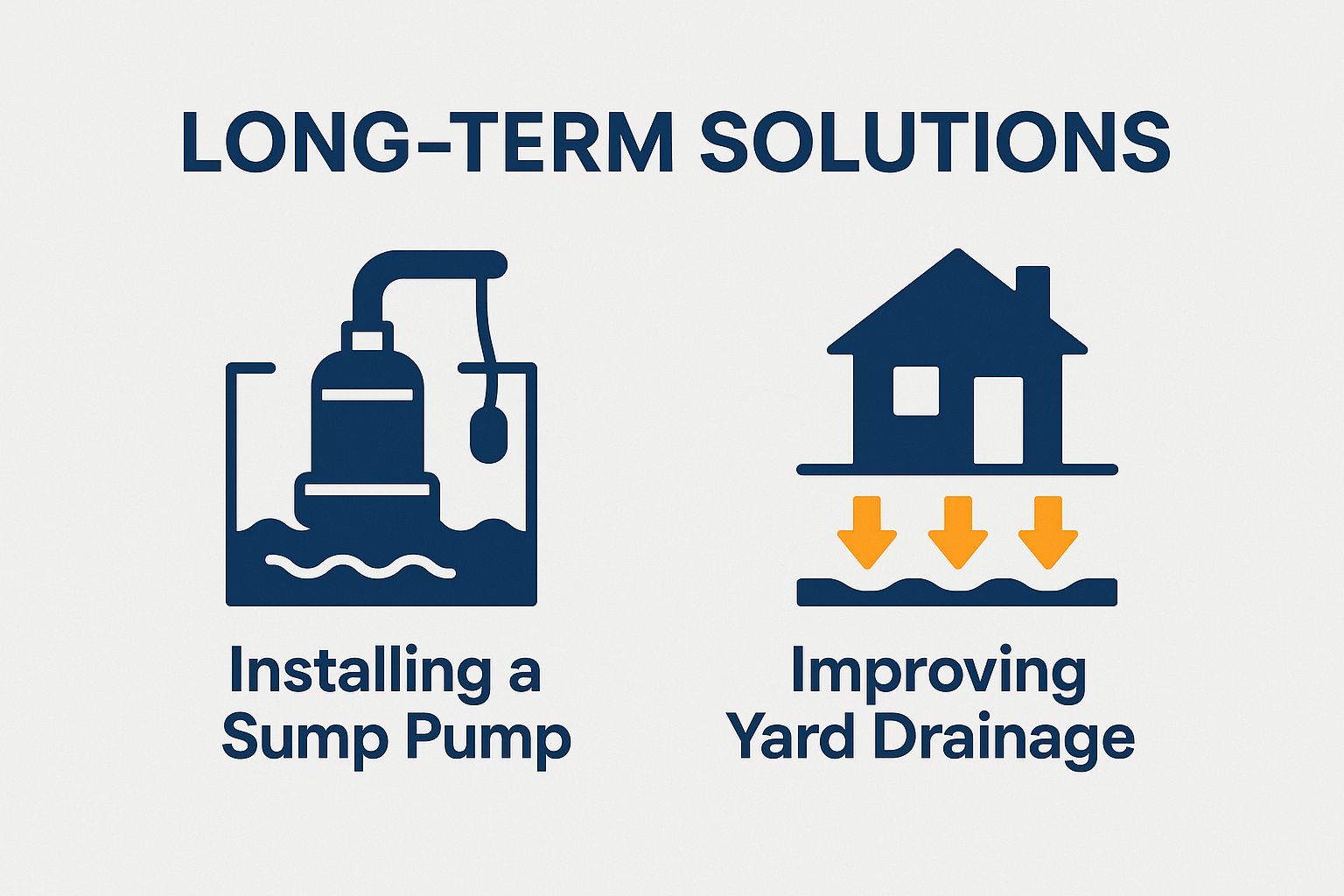
Installing a Sump Pump
Installing a sump pump serves as an effective strategy for managing water accumulation, thereby reducing the risk of basement flooding and preventing further water damage during periods of heavy rainfall.
There are two primary types of sump pumps: submersible and pedestal.
- Submersible pumps are positioned inside the sump pit, rendering them less visible and quieter during operation; their cost typically ranges from $150 to $300, depending on the capacity.
- In contrast, pedestal pumps are situated above the pit, which facilitates easier access for maintenance, and generally range in cost from $100 to $200.
Schedule routine maintenance every six months for optimal performance. This maintenance should include checking the functionality of the pump and clearing any debris that may obstruct operation. Additionally, testing the pump by pouring water into the pit is recommended to confirm that it activates correctly.
Improving Yard Drainage
Good yard drainage is crucial. It prevents water from accumulating near your foundation and reduces the risk of basement flooding.
- Grade the yard to slope away from the foundation. This usually costs $3 to $5 per square foot;
- Extend downspouts to direct water at least 10 feet away from your house. Materials typically cost $50 to $100;
- Install French drains for a permanent solution. Costs range from $20 to $40 per linear foot.
By implementing one or more of these strategies, homeowners can significantly reduce the risk of water damage to their property.
Preventive Measures
Regular preventive measures like gutter maintenance and checking electrical devices for moisture can reduce water-related risks. This helps keep your basement dry and safe.
Regular Maintenance Checks
Regular maintenance checks help spot potential water intrusion before it becomes a big problem. Homeowners are advised to schedule these inspections during the spring and fall seasons.
It is beneficial to create a detailed checklist that includes key areas for assessment:
- Inspect gutters for debris, ensuring that the storm sewer system is not clogged.
- Check downspouts for blockages.
- Examine the foundation for any cracks and consider contacting repair services if needed.
- Utilize a moisture meter to assess basement walls as part of a comprehensive damage assessment.
- Inspect attic insulation for signs of moisture damage and think about basement restoration if issues are found.
- Ensure that drainage systems are clear and functional, including any connected landscape drainage.
Hire a professional for an annual inspection. Companies like Rainbow Restoration or SERVPRO can spot issues you might miss.
Waterproofing Techniques
Waterproofing protects basement walls from water intrusion and maintains your building’s structural integrity.
Start by applying a high-quality waterproofing sealant. A 5-gallon container usually costs $50 to $100.
Next, consider installing an interior drainage system from companies like Basement Systems. Costs typically range from $1,500 to $3,000. This system effectively diverts water away from the foundation during periods of heavy rainfall.
Additionally, using vapor barriers on walls helps prevent moisture seepage. Rolls usually cost between $0.15 and $0.50 per square foot. Collectively, these methods greatly enhance the basement’s resilience against water damage during the restoration process.
